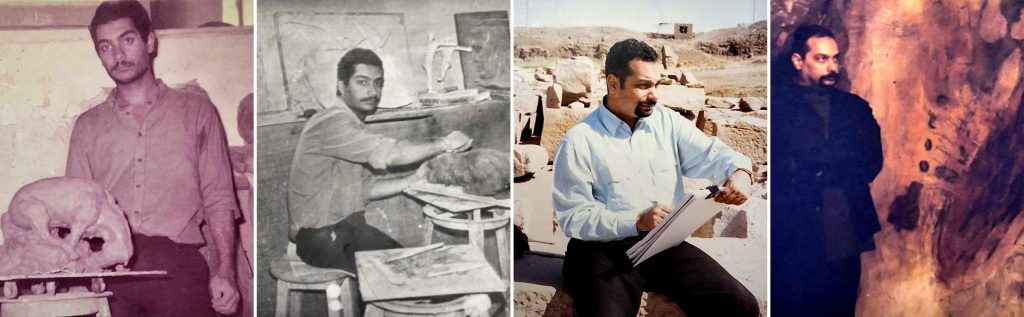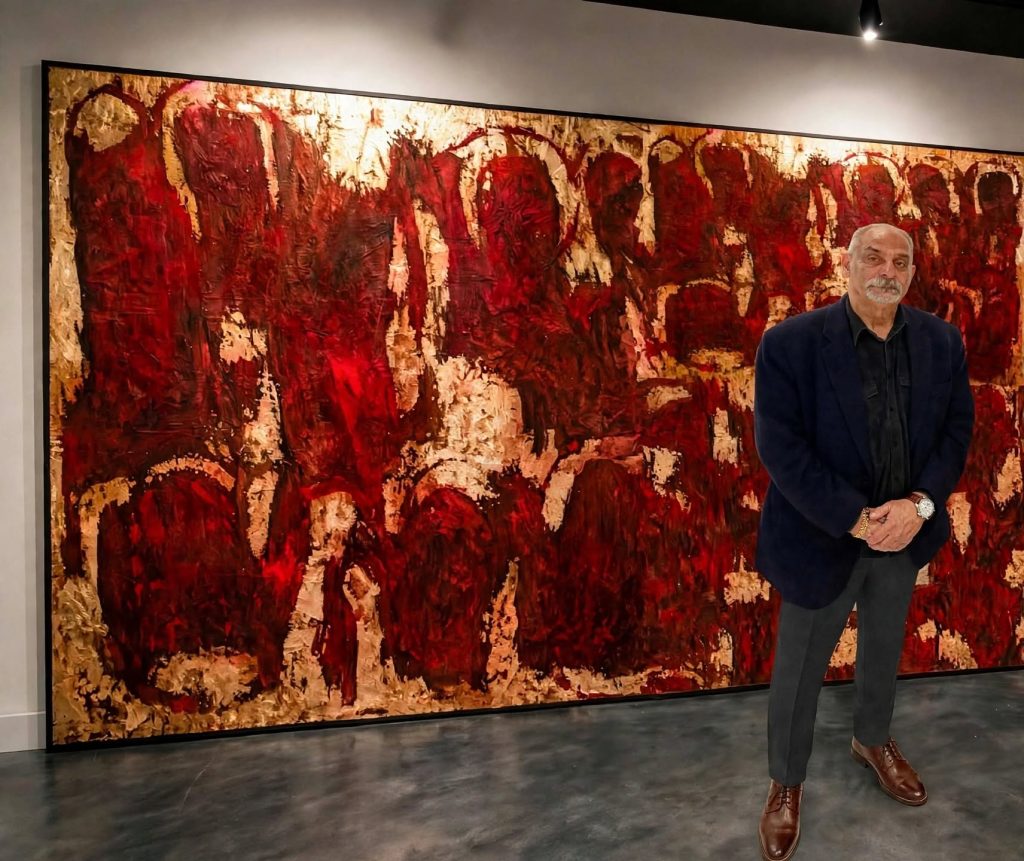
Georges Fikry Ibrahim is an artist, academic professor, and researcher based in Cairo. His practice operates at the intersection of pedagogy, ritual, and media archaeology — not as thematic concerns, but as conditions that shape how the contemporary is produced. Within the Faculty of Art Education at Helwan University, teaching is employed as method: a laboratory where art functions as a philosophical and cultural apparatus, testing the threshold at which knowledge becomes an event. This research extends into experimental workshops with women, children, and youth, where ecology, social structure, and pedagogy are approached as interconnected fields of lived experience. The subject is not given; it is enacted.
Working across photography, video, animation, graphics, installation, and performance, each medium is treated not as a tool of representation, but as a mode of inscription. The image does not simply depict. It intervenes. Each medium becomes a way of re-reading Egyptian rites, memories, and everyday rituals under current digital conditions — where tradition is not heritage to be preserved, but active code to be executed. Ritual forms persist only by transforming. Memory is not an archive. It is an algorithm. The work moves beyond the simple opposition of local and global, traditional and contemporary, to focus on what is operative: not what the sign means, but what the sign does when deployed in real time. It does not produce a nostalgic image. It produces a reading of how cultural continuity holds under conditions of fracture. The studio functions as method, the classroom as apparatus, the image as evidence, and the body as the site where they converge.
Click here for full CV
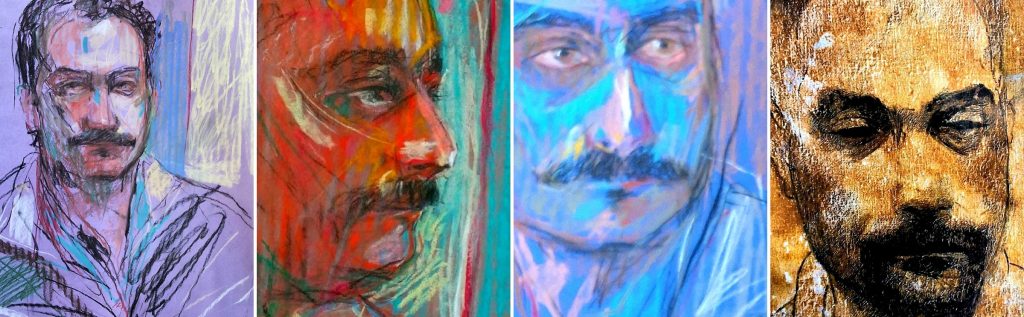
Portraits de Georges Fikry Ibrahim – par Shady El Noshokaty et Ibrahim El-Desouky
George Fikry searches for the Truth which is the light of the world.He has been exhausted by triangles, and circular lines, and meandering lines, and metamorphic ones – and by persons who are crushed by their own feeling that death pursues them wherever they alight.Then, George ascends to a height from where he sees them as if he were hovering above them like the desperate mythical bird – and when he draws them, we see of them nothing but perspective projections that reveal their bare heads, and the tops of their shoulders, and the whispers of their feet and their palms.And we, when we contemplate the giant work of George Fikry on paper, we fold our forearms to our chests, and we crouch over them, and we fold our chests with all that is within them inside our bodies, in fear that those infernal circular storms which his tragic drawings embody should overtake us, and that the raging desert winds should blow in our wake.He is an artist – truly – capable of revelation and epiphany, and his distinctive drawings have now begun to ascend the steps, one after the other, establishing their own world, independent in its freedom from the world. [Ahmed Fouad Selim]
يبحث جورج فكري عن الحقيقة التي هي ضوء العالم. أرهقته المثلثات، والخطوط الدوّارة، والمستعرّجة، والمتحولة – والأشخاص الذين يسحقهم إحساسهم بأن الموت يطاردهم أينما حلّ. إذ ذاك يصعد جورج إلى أعلى حيث يراهم وكأنّه يحلّق فوقهم كالطير الأسطوري اليائس – فإذا رسمهم لا نرى منها سوى مساقط المنظور التي تكشف رؤوسهم العارية، وأعلى أكتافهم، ووشوش أقدامهم وأكفّهم. ونحن حين نتأمل عمل جورج فكري العملاق على الورق، نضم سواعدنا إلى صدورنا، وننكمش فوقها، ونطوي صدورنا بما فيها داخل أجسامنا، خشية أن تلحق بنا تلك العواصف الدائرية الجهنمية التي تجسّدها رسومه التراجيدية، وأن تهب في أثرنا رياح الصحاري العاتية. فهو فنان – بحق – قادر على الكشف، والتجلّي، ورسومه المميزة الآن أخذت تصعد الدرجات واحدة تلو الأخرى، منشئة عالمها، ومستقلة بحريتها عن العالم .أحمد فؤاد سليم،
Fikry’s multifarious work brings to the fore timeless themes in what he describes as “from a certain Egyptian perspective, in a changing society and political context.” Yet his unmistakably abstract style belies any sense of something inherently Egyptian about the piece. Is Fikry in fact saying that despite the evolution (or indeed, devolution) of the political and social system, some basic facts will remain unchanged.But something that Fikry is certainly sure about is the existence of the Faris, the knight, who “may or may not come in the future, yet he belongs to history and defends in the name of the good,” he smiles. “We are all knights.”Fikry’s concern to preserve and give expression to the mythical memory forms the thrust of his artistry, By Michaela Singer. art curator.
يُسلّط عمل فكري المتنوع الضوء على موضوعات خالدة، فيما يصفه بأنه «من منظور مصري معيّن، في مجتمع وسياق سياسي متغيّر»، ومع ذلك فإن أسلوبه التجريدي الذي لا يُخطئ ينفي أي إحساس بوجود شيء مصري أصيل في العمل، فهل يقول فكري في الواقع إنه رغم تطور، أو في الحقيقة تدهور، النظام السياسي والاجتماعي، ستبقى بعض الحقائق الأساسية دون تغيير، لكن هناك شيء واحد متأكد منه فكري تماماً، وهو وجود الفارس، الذي «قد يأتي أو لا يأتي في المستقبل، لكنه ينتمي إلى التاريخ ويدافع باسم الخير»، يقول مبتسماً: «كلنا فرسان»، ويُشكّل حرص فكري على الحفاظ على الذاكرة الأسطورية والتعبير عنها جوهر فنّه .ميكايلا سينجر.قيّم فني
Egyptian culture, with its roots, is his main theme. Ancient writing, such as hieroglyphics, is among the cultural and philosophical symbols he uses to show the way of life in Egyptian society. There are also elements of sacred architecture and art, such as the pyramids, temples, royal pharaohs, tombs, icons, old Coptic monasteries, Islamic architecture, folkloric elements and narrations. But Egyptian reality is also one of his aims; it is his homeland and his source of inspiration. He returns to its symbols, and sometimes its cultural, social and economic variables also appear in his new works which, through contemporary media, reflect cultural and social changes. The artist says: “My art is narration, expression and the memory of visual forms .” Karin Adrian von Roques ,Curator- Middle East and North Africa
تعد الثقافة المصرية بجذورها موضوعه الرئيسي، فالكتابة القديمة مثل الهيروغليفية من بين الرموز الثقافية والفلسفية التي يستخدمها لإظهار أسلوب الحياة في المجتمع المصري، وهناك أيضاً عناصر من العمارة والفن المقدس، مثل الأهرامات والمعابد والفراعنة الملكيين والمقابر والأيقونات والأديرة القبطية القديمة والعمارة الإسلامية والعناصر الفولكلورية والحكايات، لكن الواقع المصري أيضاً من أهدافه، فهو وطنه ومصدر إلهامه، ويعود إلى رموزه، وأحياناً تظهر أيضاً متغيراته الثقافية والاجتماعية والاقتصادية في أعماله الجديدة التي تعكس، من خلال وسائط معاصرة، التغيرات الثقافية والاجتماعية، ويقول الفنان: «فني هو سرد وتعبير وذاكرة للأشكال البصرية»، كارين أدريان فون روكيس، قيّم فني