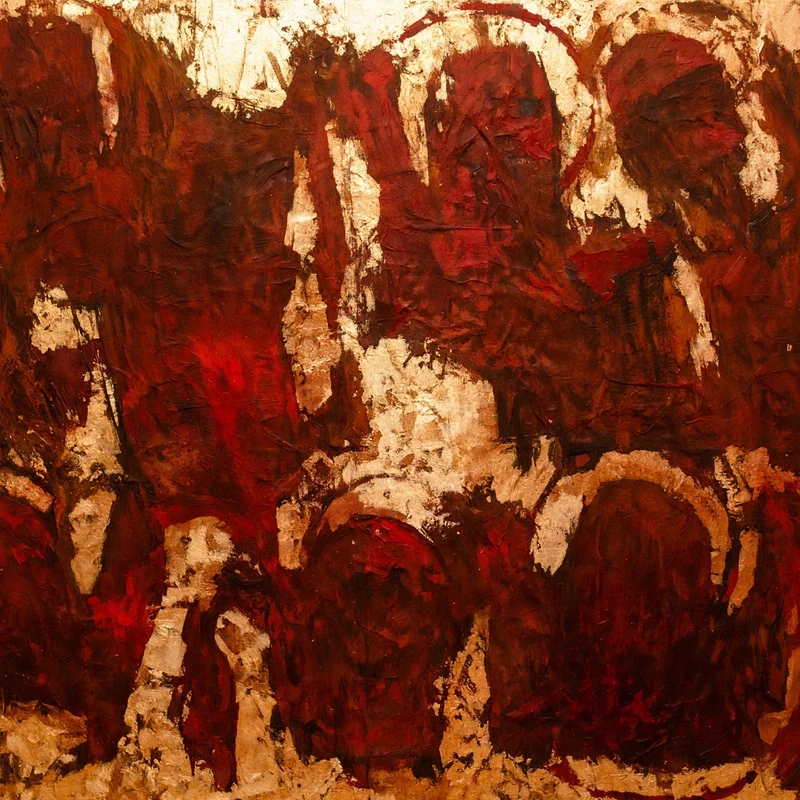

mixed media on canvas,480x350cm
mixed media on canvas,400x315cm
mixed media on canvas,420x300cm


 This is not a celebration of folklore. Folklore is what remains when power moves on.I approach Oriental Dance as a contraband knowledge. A somatic philosophy smuggled through generations in the hips, not in books. The West called it “belly dance” to reduce it to anatomy. I return it to cosmology.The “heart” in the title is not sentimental. It is the core algorithm. The beat that predates music. The dancer does not follow the rhythm; she negotiates with gravity. She is a mathematician of curves, a cartographer of desire.The “magic” is not mysticism. It is labor. The invisible labor of women who transformed domestic space into a stage, shame into spectacle, restriction into revolution of the pelvis.This project is a post-colonial autopsy of the gaze. Who looks? Who is allowed to move? I worked with absence: the veil as a frame, the scarf as a weapon, the coin as a sound that interrupts patriarchy.Oriental Dance has no choreographer. It has ancestors. This body of work does not document movement. It documents resistance. The only magic here is survival
mixed media on canvas,480x350cm
mixed media on canvas,400x315cm
mixed media on canvas,420x300cm